
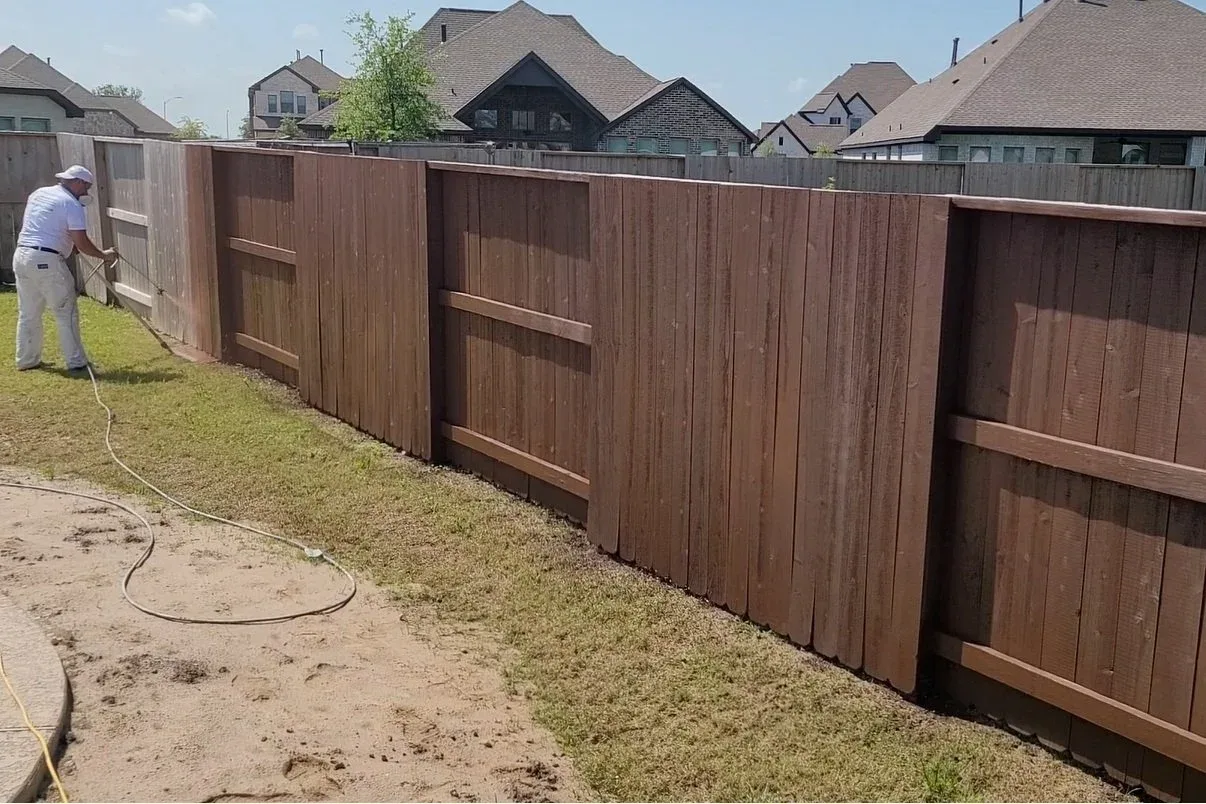
Drive through Greatwood or New Territory after a wet July and you can watch a fence age in real time. The picket faces that catch the western sun turn pale and dry while the shaded runs near the house stay damp for days. That split is exactly what we see on most Sugar Land jobs — the boards are structurally fine, but the finish gave out long ago and the wood is now fending for itself. A proper stain-and-seal job stops that slide, evens out the color, and adds years before any board ever needs swapping. We have done this work across Riverstone, Telfair, First Colony, Sugar Creek, and the older sections of Greatwood, and the fix almost always starts with what is under the stain, not the stain itself.
What Fort Bend Weather Does to a Fence
Sun is the slow killer here. Ultraviolet rays cook the natural binders in the wood until the surface goes silver and powdery, and once that happens stain has nothing solid to grab. But in Sugar Land the bigger problem is water with nowhere to go. Humidity that parks above eighty percent for weeks keeps end grain from ever drying out, and the expansive clay soil under Fort Bend County traps rain against post bases and the bottom rail. That is why decay almost always begins at two spots: the picket tops where storms pool, and the first six inches off the ground where the clay stays wet. Fixing the look without addressing that moisture path is a short-term patch. We treat both.
How We Prep Before Any Color Goes On
The staining is the easy part. The result lives or dies on the prep, so we spend most of our time there:
- Deep wash — we pressure clean every face to clear mildew, pollen film, and the dead gray layer so the new finish bonds to live wood.
- Smooth the rough spots — furring, splinters, and any failing old coating get knocked back so the stain lays down evenly.
- Tighten the structure — loose nails and backed-out screws are reset so warped boards pull flat again.
- Call out bad boards — pickets that are too far gone get flagged for replacement up front, so you never pay to stain wood that should be in the trash.
- Saturate, including the hidden spots — we drive penetrating stain and sealer into the grain and hit the post caps and picket tops where rot likes to start.
Picking a Tone
Color is a choice about how much grain you want to see and how much protection you need. A clear or near-clear finish lets the natural wood show through and is great on a newer fence with character worth keeping. A mid-tone option deepens the color and warms the wood while the grain still reads. A fully opaque, solid finish hides mismatched or older boards and throws the most shade on UV damage — it is what we often reach for on long-weathered fences in First Colony and Sugar Creek. We walk the options with you on site using your actual lighting rather than a chip in a showroom.
Cedar, Pine, and the New-Fence Question
The two woods we meet most around here behave like opposites. Cedar resists rot on its own and soaks up stain readily, but left bare it grays in a hurry under our sun. Treated pine is sturdier and easier on the budget, yet it often arrives carrying moisture from the treatment plant and has to dry down before it will accept a finish. We meter the moisture and match the product so the stain absorbs instead of sitting on the surface and flaking. That same patience applies to brand-new fences: fresh wood usually needs several weeks to a few months to cure, and we will tell you straight whether yours is ready or whether waiting now saves a redo later. Weathered fences need the reverse — more washing and prep to strip the dead surface before anything new can hold.
A Local Crew You Can Find Again
The Proud Paintbrush is a residential painting company based right here in 77498, locally owned since 2020 and Fully Insured · $1M Liability. We stand behind the work with our 2 & 5-Year Written Warranty, and because we live in Fort Bend County you are never chasing a number that stops answering. We also handle the parts other crews skip — gates that drag on shifting clay, lattice and trim detail, and the shared HOA fences common in Riverstone and Telfair, where we coordinate so both sides match approved colors. See the full fence staining service, look over what it costs, or pair it with exterior painting in Sugar Land for one consistent look. When you are ready, grab a free estimate and we will walk the fence with you. Call (832) 605-0493.