
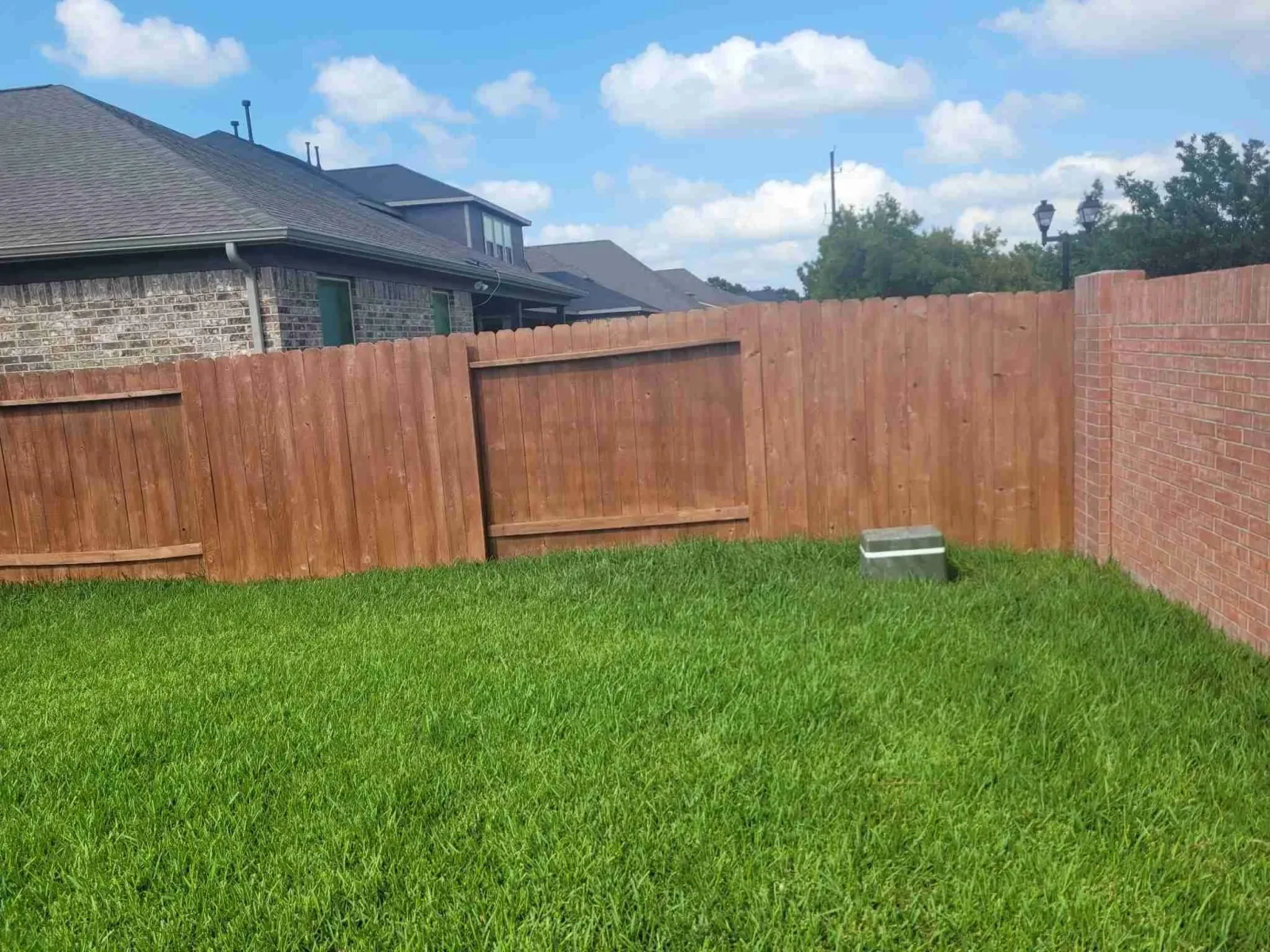
Walk any street in Sienna or Quail Valley after a wet spring and you will spot the same story on fence after fence: pickets that started out warm and amber, now drifting toward a flat silver. That color shift is not just cosmetic. It is the wood telling you the protective surface has worn through, and in Missouri City that wears through fast. Between full-throttle summer sun, swampy August humidity, and the dense Fort Bend clay that pins water against your post bases, a bare fence here has a short clock. The Proud Paintbrush stains and seals wood fences across 77459 and 77489 to reset that clock and keep your boards solid.
How We Read a Missouri City Fence Before We Quote It
Every estimate starts with a hands-on look, because two fences a block apart in Lake Olympia can need completely different work. We check the moisture in the wood, push on the posts to find movement, scan the picket tops and bottom rails where rot likes to start, and note which runs sit in shade versus blistering afternoon sun. Fences backing onto the lakes and greenbelts around Lake Olympia and Vicksburg pick up mildew on their shaded north faces, while the south-facing runs in open Riverstone yards bake and check. That read tells us how much prep each section truly needs instead of pricing the whole thing as one average.
Prep Is Where the Job Is Won or Lost
Stain only performs as well as the surface under it, so we put the bulk of our effort before the first drop of finish goes on. We pressure wash every board to lift off the gray, oxidized top layer plus any mildew and flaking old coating, exposing clean wood the stain can actually grip. Boards that are furring or rough get a sanding pass so the finish lies flat. We reset popped nails and screws, and if we find a picket or rail that has gone soft, we flag it and talk replacement with you up front rather than painting over a problem. Only once the wood is clean, sound, and dry do we move to coating.
Picking a Tone, and Why Your Wood Type Matters
The finished look is your call, and it lands on a sliding scale. Want the grain to stay visible with just a warm, protective glow? A clear or lightly tinted stain does that, which is why it is a favorite on the newer cedar fences going up around Sienna and Riverstone. Prefer a richer, more even result that masks board-to-board color swings on an older fence? A heavier, more opaque stain pulls mismatched pickets into one consistent finish. Your wood drives the recipe too. Cedar resists rot and bugs on its own and pulls finish in slowly, so it sips. The pressure-treated pine that builders hang on most Missouri City fences is far thirstier and usually wants extra product to seal end to end. We dial the application to whatever is actually nailed to your posts.
Fresh Lumber vs. a Fence That Has Weathered
Age flips the whole approach. A newly built fence is often still too wet and too 'mill-glazed' to drink in stain, so it typically needs to dry out and cure for a few months of decent weather before it is ready, otherwise the finish just beads and sits there. A fence that has already gone gray has the reverse issue: that dead surface layer blocks penetration, so it demands a real wash and sometimes a sanding to open the grain back up before stain can sink in. We test moisture and surface condition at the visit and tell you straight which situation you are in and when to schedule.
Gates, HOA Lines, and the Parts Crews Skip
We coat the entire fence, including the spots that get shortchanged. Gates get finished on both sides and along their swelling edges so they keep swinging clean, and any lattice, trim, or post caps get stained to match the runs. Plenty of Missouri City fences sit on shared property lines or inside HOA-governed communities, so we finish your side properly and are happy to coordinate timing if a neighbor wants their face done in the same window.
A Fort Bend Crew That Stands Behind the Work
The Proud Paintbrush has been locally owned since 2020 and works Missouri City and the rest of Fort Bend County week in and week out, so we already know how this climate chews on exterior wood. We are fully insured with $1M liability, we coat with Sherwin-Williams products, and every fence we stain is backed by our 2 & 5-Year Written Warranty. See the full fence staining service, bundle it with Missouri City exterior painting, look over our pricing, or request a free estimate. Reach The Proud Paintbrush at (832) 605-0493.