
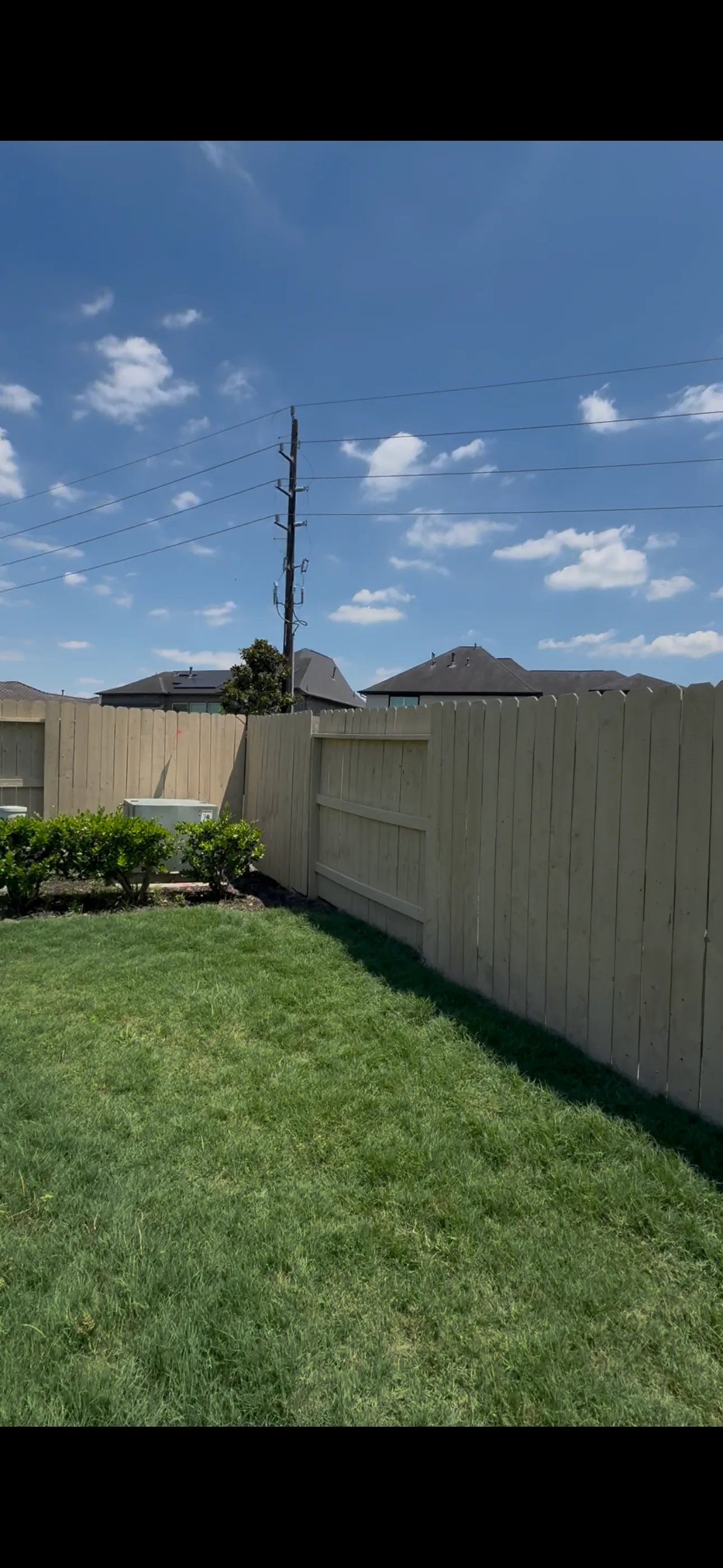
A fence in Richmond ages on Brazos River clay, and that soil writes the whole story. The same expanding-and-contracting ground that racks foundations across 77406 and 77469 heaves fence posts a little every wet-then-dry cycle, opening the bottom rail to standing water and tilting gates out of square. By the time a homeowner in Pecan Grove or Bridlewood Estates calls us, the wood is usually doing three things at once: graying on the sunny face, blackening with mildew on the shaded north runs, and going soft at the base where the clay never lets it dry. We treat all three, in that order, before any stain comes out of the can.
Prep Is 80 Percent of the Job
Anyone can roll color onto pickets. The reason our finish outlasts a quick contractor spray is everything that happens first. We start by pressure washing the entire run to strip mildew, ground-in dirt, and the dead silvery fibers that block stain from reaching live wood. Boards that have furred up get sanded back to a sound surface. Nails and screws that the clay movement has backed out get driven home so the pickets sit flat. Anything truly rotted — a split rail, a picket gone punky at the bottom — gets flagged for replacement before we coat, because there is no sense sealing a board that belongs in the trash. Only once the fence is clean, dry, and tight do we move to stain.
How Stain Actually Protects Wood Here
Bare fence boards fail because sunlight chews through the natural binder in the wood and our humidity drives moisture into every crack. The result is the chalky gray you see on neglected fences along older Richmond streets, followed by rot working up from the soil line and down from the picket tops where rain pools. A surface coating that merely sits on top peels and traps water underneath. What works on the Gulf Coast is a penetrating Sherwin-Williams stain and sealer that soaks into the grain — we hit the end grain, the post caps, and the picket tops deliberately, since those are the entry points decay uses first.
Picking a Tone for Your Fence
Color is your decision, and the three families behave differently in Richmond sun. A clear or transparent finish keeps the wood looking like wood and shows off cedar grain, but it asks for refreshing sooner. A semi-transparent sits in the middle — real pigment for UV defense while the grain still shows through, which is what most of our Long Meadow Farms and Aliana clients land on. A solid-body stain is the workhorse for tired or patched fences: it lays down opaque, even color and the heaviest sun protection, perfect for an older shared fence in Pecan Grove that has seen better summers.
Cedar, Pine, and Knowing the Difference
Walk Richmond and you will find both western red cedar and pressure-treated pine behind the houses. Cedar drinks stain readily and has natural rot resistance, but strip its finish and it weathers in a hurry under our sun. Treated pine costs less and shrugs off bugs and decay, yet it often ships wet with treatment chemicals and will reject stain until it dries out. We meter the moisture in the wood and match the product and the timing to what we find, so the stain penetrates and bonds instead of beading up and flaking off a few months later.
Fresh Builds vs. Tired Fences
A brand-new fence going up in Aliana or Long Meadow Farms is usually too green and too damp to stain on day one — rushing it traps moisture and guarantees a redo. Depending on the lumber and the weather, that can mean waiting a few weeks to a couple of months, and we will tell you honestly when it is ready rather than taking the job early. A weathered fence near the Old Richmond historic district is the opposite problem: it needs aggressive cleaning to clear years of dead gray before fresh stain has anything to grab. We also handle the parts hurried crews skip — the gates dragging on heaved clay, decorative caps, and the shared HOA fence lines common in Aliana, where we coordinate so both neighbors get a clean result.
A Local Crew That Stands Behind It
The Proud Paintbrush has stained and painted across Fort Bend County since 2020, locally owned and Fully Insured with $1M Liability. We back the work with a 2 & 5-Year Written Warranty, so if something needs attention you are calling a Richmond-area crew, not an out-of-town number. Browse the full fence staining service, look over our pricing, or pair the fence with exterior painting in Richmond for one cohesive look. When you are ready, request a free estimate and we will walk the fence with you. Call (832) 605-0493.