
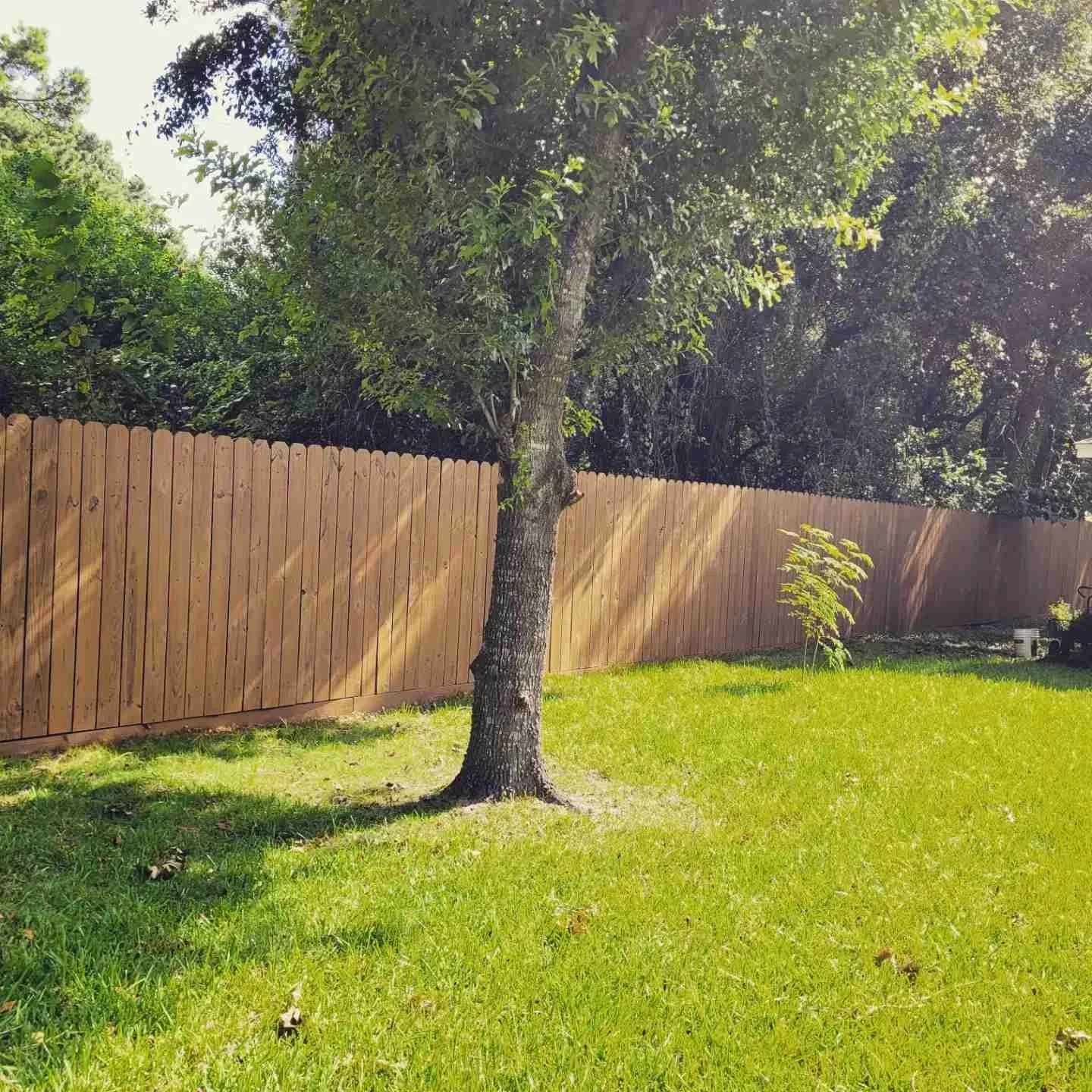
Few places in Fort Bend County put more linear feet of wood fencing on the ground than Fulshear. Between the privacy panels lining every Cross Creek Ranch backyard and the long perimeter runs wrapping the acreage lots out toward Fulbrook on Fulshear Creek, this is fence country. The catch is that wood out here works for a living: 77441 sits on shrink-swell clay, bakes under open western-Fort-Bend sun with very little mature canopy to soften it, and stays damp through our long humid stretches. A fence that looked rich and amber at move-in can read flat and ashen within a couple of summers if nobody seals it.
Long Runs, Estate Lots, and Why Fulshear Fences Are Different
This is not a town of identical 60-foot backyard panels. Many Fulshear properties carry several hundred feet of fence at once, and on the larger Fulbrook and Polo Ranch parcels you are often staining true ranch-style runs that border a pasture, a pond, or an easement. That scale changes the math. A finish that fails early on a short suburban fence is an annoyance; on a 400-foot run it is a serious expense to redo. We size our crews and our product to the footage so a big Fulshear job gets coated in tight, consistent windows rather than dragging across weeks of mismatched weather and lap marks.
How Western Fort Bend Weather Wears Wood Down
Sun does the visible damage first. Without shade trees to break it, the daily UV load in open Fulshear neighborhoods bleaches color out of bare boards and leaves them dry and brittle on the surface. Moisture does the quieter, costlier damage underneath. Our clay soil grips water and presses it against post bases long after a storm clears, and decorative post caps and flat picket tops collect rain that wicks down into the end grain. That is where soft spots and rot take hold — low at the dirt line and high at the tops. The fix is a stain that actually soaks into the fiber and a sealer that pushes water back off the surface, not a surface film that peels and lets water hide behind it.
Our Fulshear Fence Process, Step by Step
- Wash first — we pressure clean off mildew, pollen, dirt, and the dead gray surface layer so fresh stain grips live wood.
- Smooth and clear — rough, furred, or splintered boards get knocked down and any failing old finish is removed.
- Tighten the structure — loose nails and lifted screws get reset, a job that matters more on long Fulshear runs where the clay heaves posts over time.
- Call out bad boards — pickets too far gone to save are flagged for replacement before any coating goes on.
- Drive the finish in — we work penetrating stain and sealer into the grain, capping the tops and post ends where rot likes to start.
Color is your decision. Want the cedar grain to stay front and center? A lighter, more see-through tone keeps it natural. Want deeper, warmer color that still shows some grain? A mid-tone does that. Need maximum coverage and the longest sun protection on older or patched boards? The most opaque option evens everything out and shields the wood hardest against that relentless Fulshear sun.
Cedar, Pine, and Brand-New Builder Fences
Most Fulshear fencing is western red cedar or pressure-treated pine, and they ask for different handling. Cedar takes color richly and resists decay on its own, but it surrenders its warmth fast when left bare under this much sun. Treated pine costs less and holds up well structurally, yet it often arrives still carrying moisture from the treatment plant and has to dry down before it will accept a finish at all. Because Fulshear is largely newer construction, a lot of fences here are barely past their builder install — brand-new cedar that gains the most from a first protective coat once it has cured, usually a matter of weeks to a few months. We meter the moisture in your boards and time the work to the wood rather than to the calendar, so the stain absorbs instead of skinning over and lifting later. We also handle the things crews rush past on big jobs: gates that bind as the clay shifts under them, lattice and trellis sections, and the shared fence lines between homes in Jordan Ranch and the Fulshear side of Tamarron, where we coordinate so both neighbors end up matching.
A Fort Bend Crew You Can Reach Next Season
The Proud Paintbrush is a residential painting contractor based right here in Fort Bend County, locally owned and operated since 2020, Fully Insured · $1M Liability, and brushing on Sherwin-Williams stains and sealers. Every fence job is backed by our 2 & 5-Year Written Warranty, so when you want a second look down the road you are calling a local outfit, not chasing a number that has gone dark. Browse the full fence staining service, check our pricing, or bundle it with exterior painting in Fulshear so the house and the fence read as one finished property. Ready to start? Request a free estimate and we will walk every foot of the fence with you. Call (832) 605-0493.