
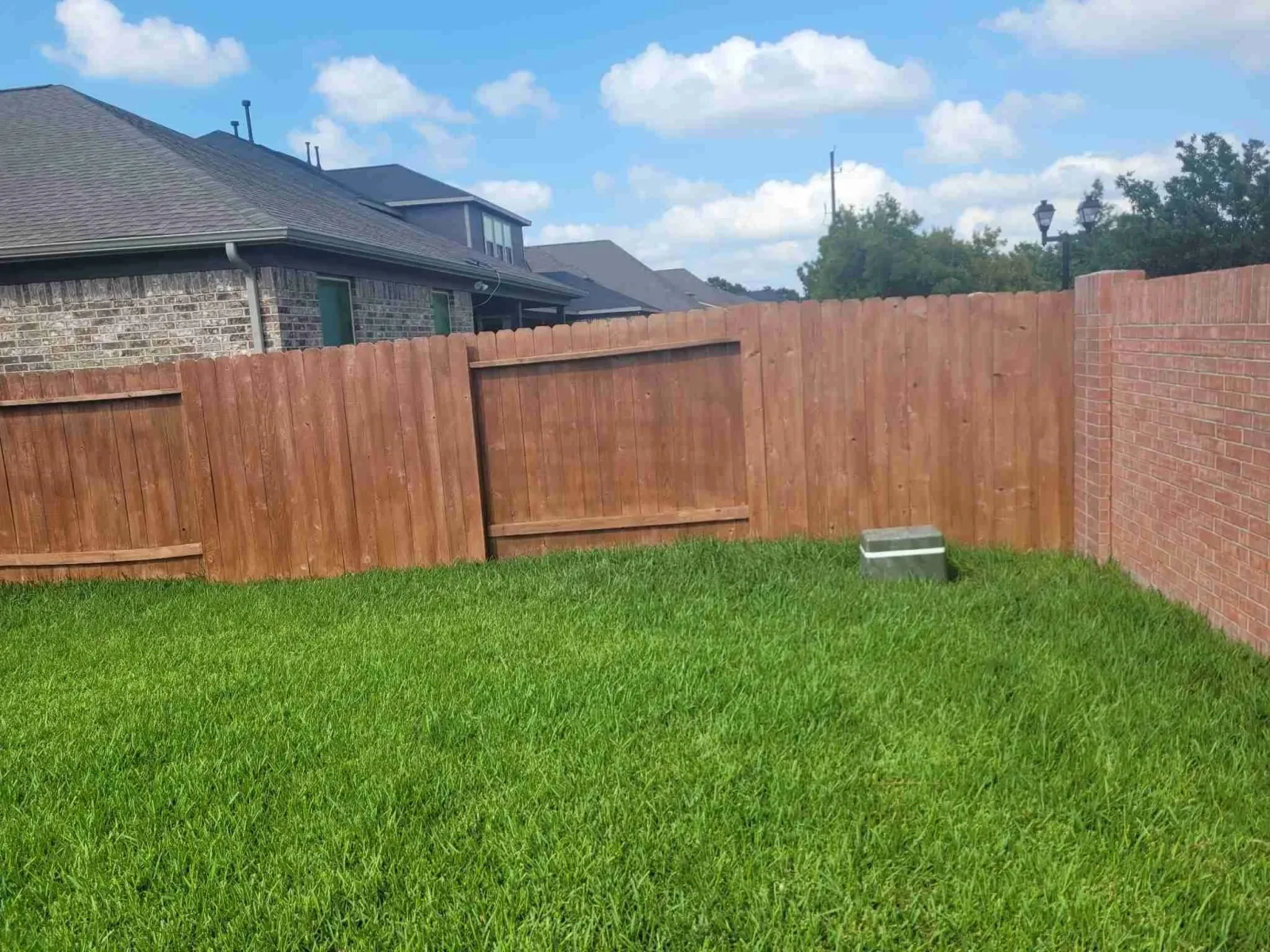
Get Your Free Fence EstimateMost homeowners in Sugar Land pay between $670 and $1,100+ to have a professional clean, prep, and stain a standard backyard fence — about $4 to $7 per linear foot for a 6-foot cedar fence.
If the pickets and posts are still solid, staining is almost always worth it. If the wood is rotted or the posts are leaning, staining is money spent on a fence that needs to come down, not get color.
The Proud Paintbrush has cleaned and stained fences across Greatwood, Riverstone, Telfair, and the rest of Fort Bend County long enough to know which gray, sun-bleached cedar fence just needs a fresh coat — and which one doesn't. Here's how the pricing breaks down, and how to tell which situation you're in.
How Much Does Fence Staining Cost in Sugar Land?
For a standard 6-foot fence, expect to pay $4 to $7 per linear foot, with most Sugar Land backyard jobs landing in this range:
Small fence (50–100 linear ft): $650 – $670
Average fence (100–200 linear ft): $670 – $880
Large fence (200–300+ linear ft): $880 – $1,100+
A typical Sugar Land backyard fence — a single-family lot with a 100–200 linear foot perimeter — usually totals $670 to $1,100 for a full clean-and-stain job. Every quote is itemized after Chris walks the actual fence, so these are starting points, not a final number.
A few things move that number up or down:
Linear footage — the biggest driver. Longer fences cost less per foot because setup and labor spread over more footage.
One side vs. both sides — staining both visible faces roughly doubles the material and labor for that portion of the job.
Fence height — a 6-foot privacy fence takes more stain and time than a 4-foot picket fence.
Condition and prep needed — heavily weathered wood, mildew, or a failing old coating all add cleaning and prep time before any stain goes on.
Stain quality — a premium penetrating stain and sealer costs more up front but holds up longer against Gulf Coast sun and humidity.
See our full fence staining price breakdown for an instant estimate calculator, or check our complete painting price list if you're budgeting for exterior work at the same time.
Why Do Sugar Land Fences Gray Out So Fast?
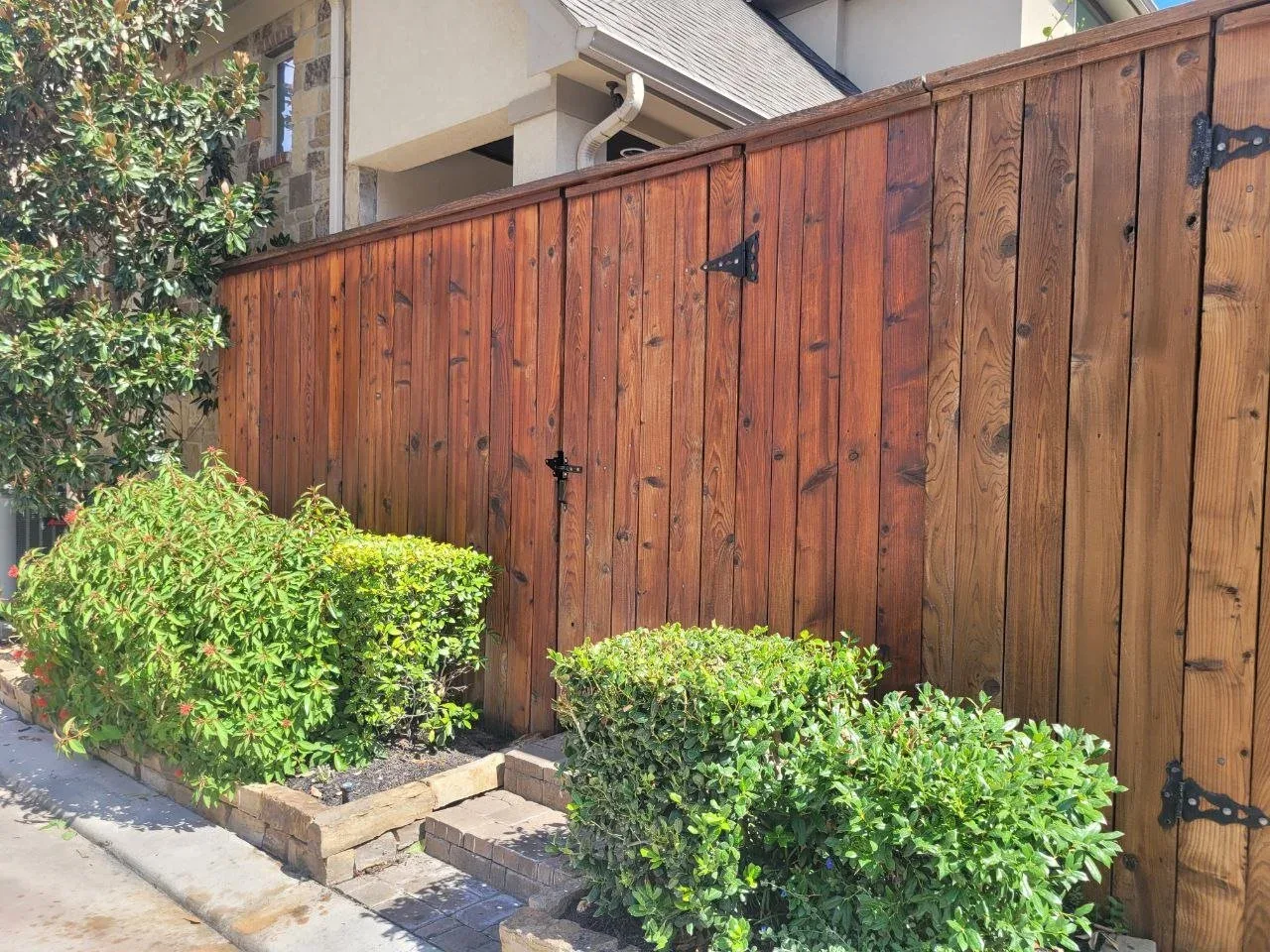
If your fence looks tired after just a couple of years, that's not bad luck — it's Fort Bend County weather doing exactly what it does to every untreated cedar fence around here.
Ultraviolet sun cooks the natural binders in the wood until the surface turns pale, silver, and powdery, often within the first year for a fence that gets full afternoon sun. Humidity that sits above eighty percent for weeks at a time keeps end grain from ever fully drying, and the expansive clay soil under Fort Bend County holds water against post bases long after a storm passes. Sprinkler overspray hitting the same few pickets every morning speeds up the same process in one spot faster than the rest of the fence.
None of that means the fence is failing structurally — usually the finish just gave out and the wood has been fending for itself. That matters if your community has appearance standards: Riverstone, Telfair, Greatwood, and New Territory all expect fences to look maintained, and a gray, patchy fence is one of the fastest ways to stand out for the wrong reason.
Is Staining Worth It — or Should I Replace the Fence?
This is the honest question, and it's the one we answer on-site before anyone signs anything.
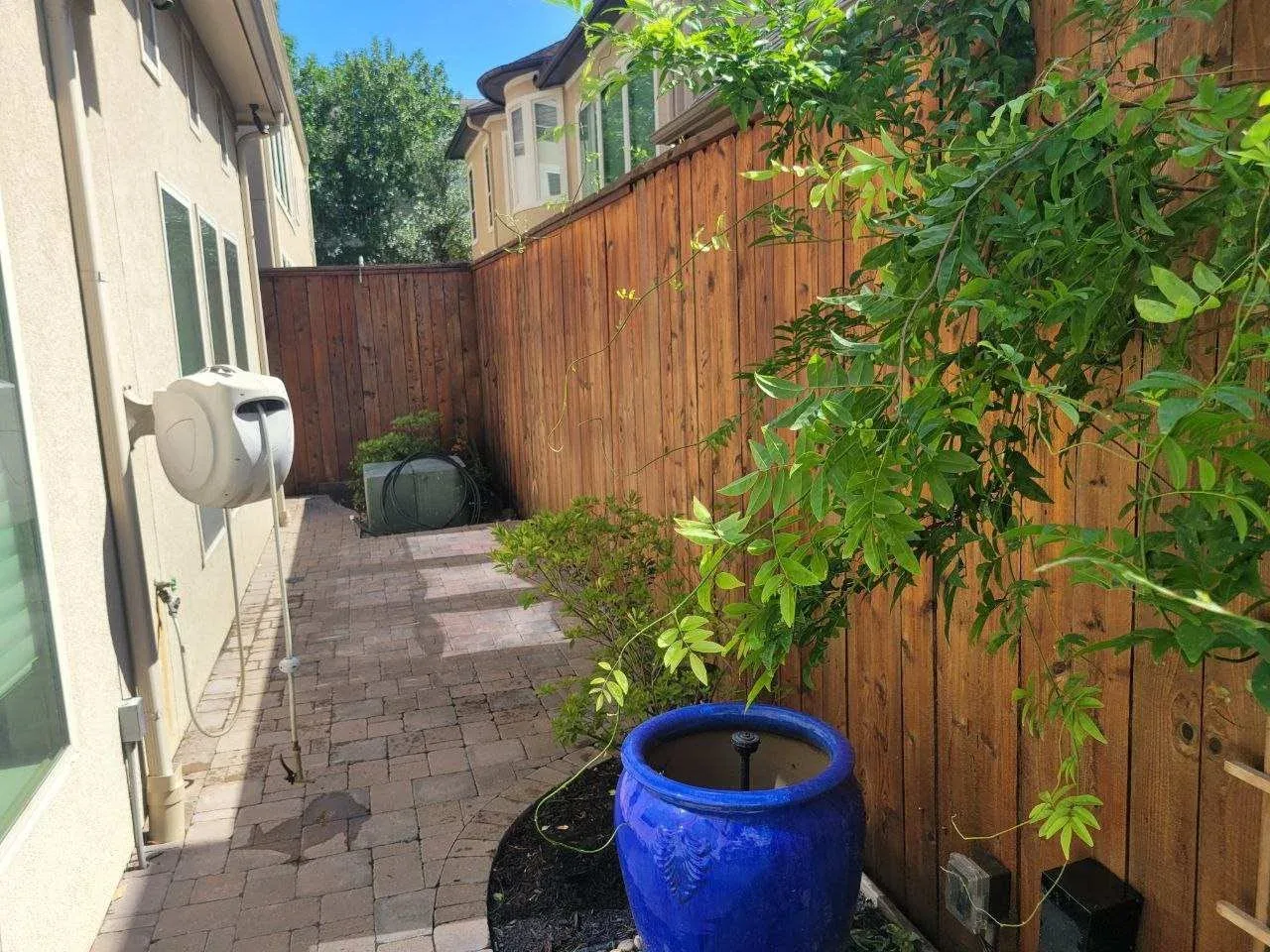
Stain it if: the pickets are still solid wood (not soft or crumbling to the touch), the posts are standing straight with no lean, and the graying is a surface problem rather than a structural one. In that case, staining protects wood that's already sound and buys you several more years before you're thinking about this again.
Replace it if: posts are rotted at the base or leaning, pickets are brittle and cracking, or entire sections are sagging. Staining over failing wood just puts fresh color on a fence that's already on its way out — you'll be paying for the job twice, once now and again when you replace it next year.
Replacement runs several times the cost of a stain job once materials, posts, and labor for new construction are factored in. If part of your fence is sound, staining what's good and replacing only the failed sections is usually the smarter spend. We'll tell you straight which category your fence falls into — recommending against a stain job that won't hold is part of how we do business. See real examples of the kind of finish we're talking about in our completed project gallery.
What Does Professional Fence Staining Include?
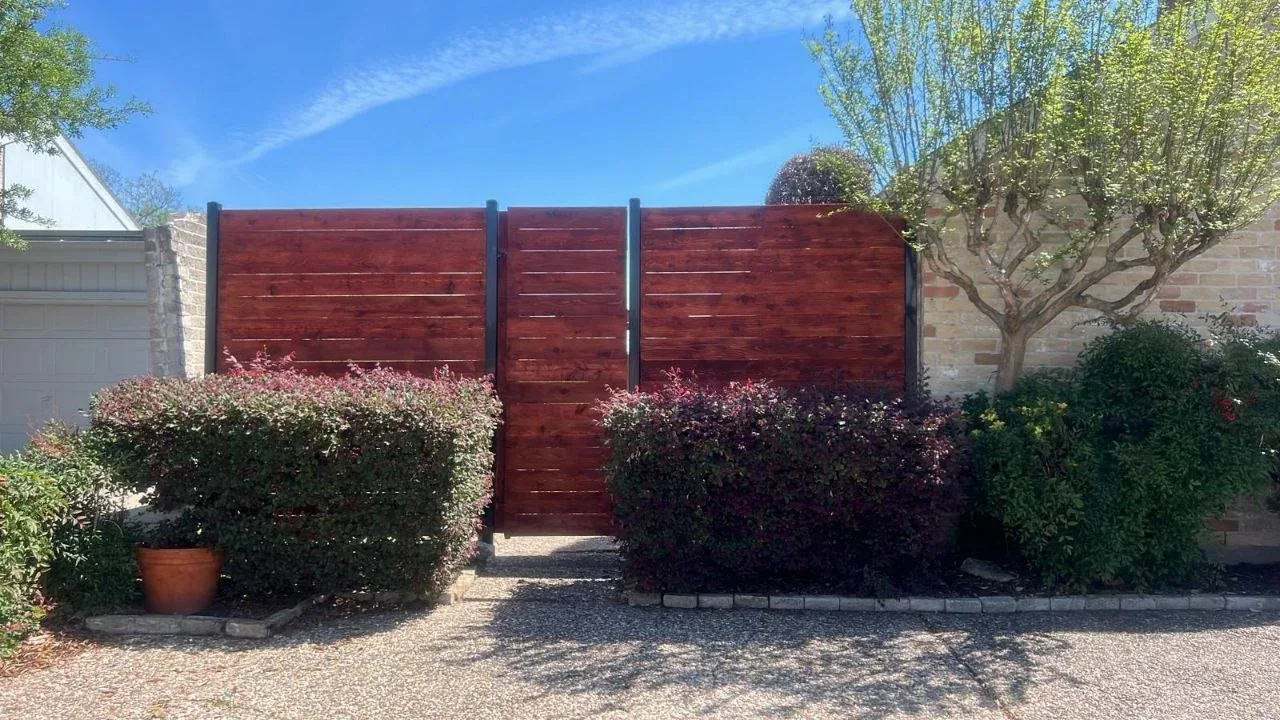
A proper fence staining job is mostly prep, not paint:
Pressure washing to clear mildew, pollen film, and the dead gray surface layer so the new finish bonds to live wood.
Minor repairs — resetting loose nails and screws, smoothing rough or splintered spots, and flagging any boards too far gone to stain.
Full drying time before any stain goes on, since wet wood won't absorb a finish evenly.
Quality stain and sealant, driven into the grain and into the hidden spots — post caps and picket tops — where rot likes to start.
Even application across every board, not just the faces that are easy to reach.
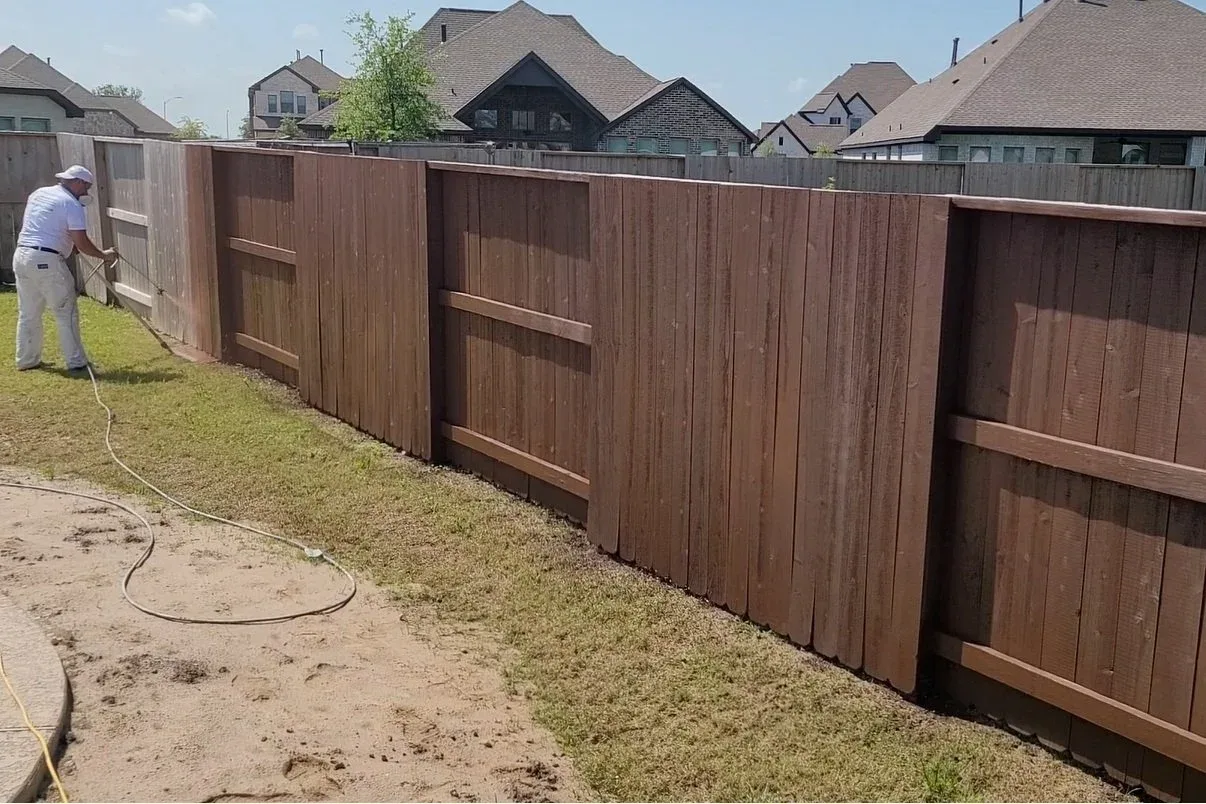
That's the difference between a stain job that looks good for a season and one backed by our 2 & 5-Year Written Warranty. It's craftsmanship and protection for the wood, not a quick coat of color — see what Sugar Land homeowners say about the results on our testimonials page.
How Long Does a Stain Job Last in Texas Weather?
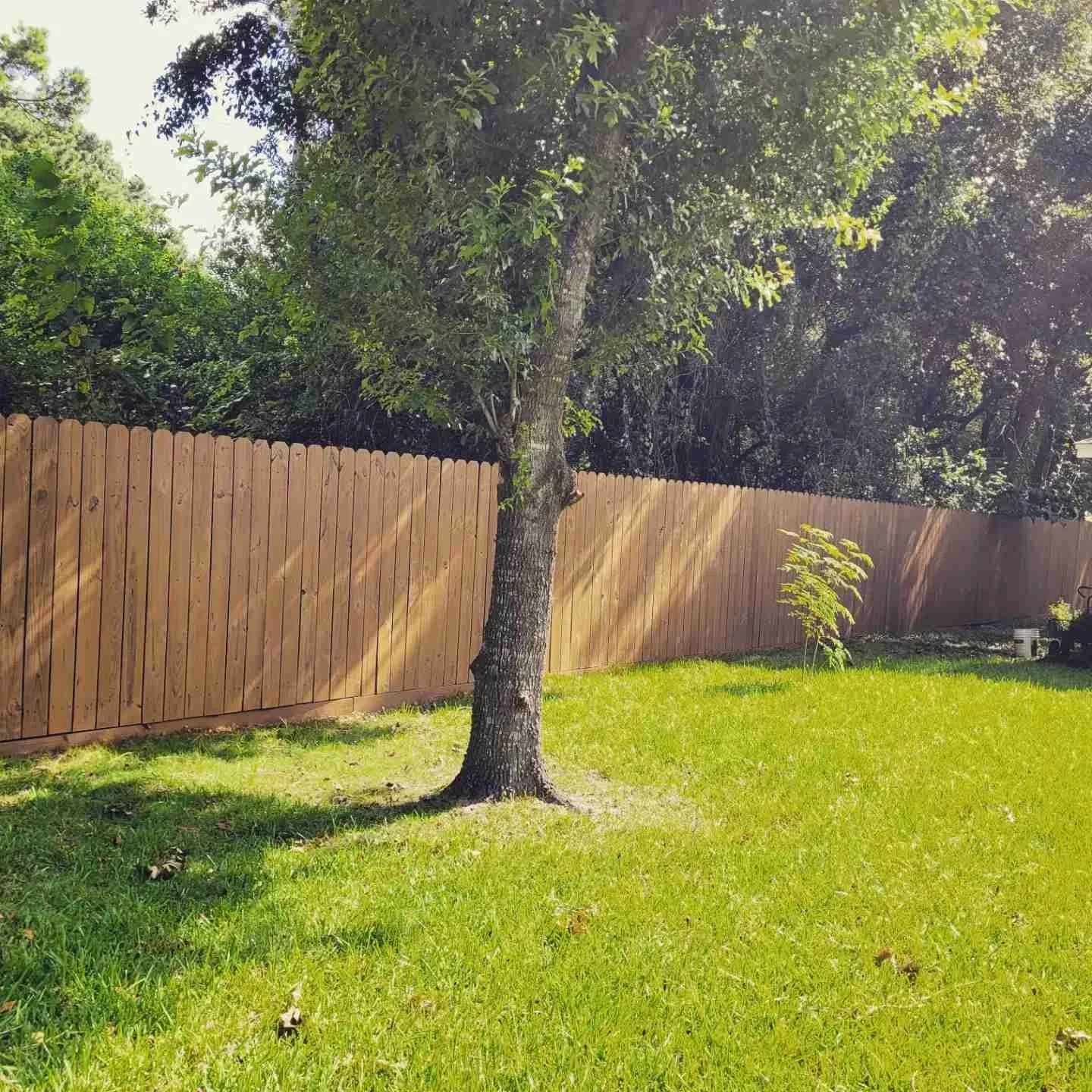
Between Sugar Land's sun and humidity, plan on roughly two to four years before a fence needs a refresh. Shaded runs and solid, opaque stain tones tend to hold the longest; a fence that takes full western sun all day will show wear sooner.
A light maintenance coat partway through that window — rather than waiting for the fence to gray out completely again — stretches the life of the finish and protects the investment you already made. It's a smaller job than starting over, and it keeps the wood from ever getting back to the point where prep becomes the bulk of the work again.
Frequently Asked Questions
A few more questions Sugar Land homeowners ask before booking — see our full FAQ page for everything else.
How long does fence staining take?
Most residential fences take one to two days from wash to final coat, depending on linear footage and how much prep the wood needs. Drying time between cleaning and staining can add another day if humidity is high.
Do I need to stain both sides?
Not necessarily. Many homeowners only stain the side visible from their own yard or the street. Staining both faces protects the wood more thoroughly and is common on shared HOA fences, but it does add to the cost.
Can you stain a fence that's already gray?
Usually, yes. A weathered, silver-gray cedar fence just needs more cleaning and prep — sometimes a brightening treatment — to strip the dead surface layer before new stain will absorb properly. We'll assess the wood on-site to confirm it's sound enough to stain.
What's the best time of year to stain a fence in Sugar Land?
Spring and fall are ideal. We want the wood dry and the forecast mild so the stain can soak in and cure without fighting summer heat or a passing Gulf storm.
Does staining come with a warranty?
Yes. Every fence staining job is backed by our 2 & 5-Year Written Warranty, so you're covered if the finish doesn't hold up as it should.
Chris will take a look at your fence, tell you straight whether it's worth staining or better off replaced, and put an itemized quote in writing — no pressure.
Request Your Free Fence EstimateServing Sugar Land and Fort Bend County
The Proud Paintbrush has been locally owned right here in Sugar Land since 2020 — read more on our our story page. We bring the same prep-first process to professional fence staining in Sugar Land that we use across every exterior project, and we pair it often with exterior painting in Sugar Land for one consistent look, backed by our 2 & 5-Year Written Warranty. We also stain fences for homeowners in Katy, Missouri City, and Richmond. See our Sugar Land service area for the rest of what we do locally, or check our full painting price list if you're budgeting for exterior work at the same time.