
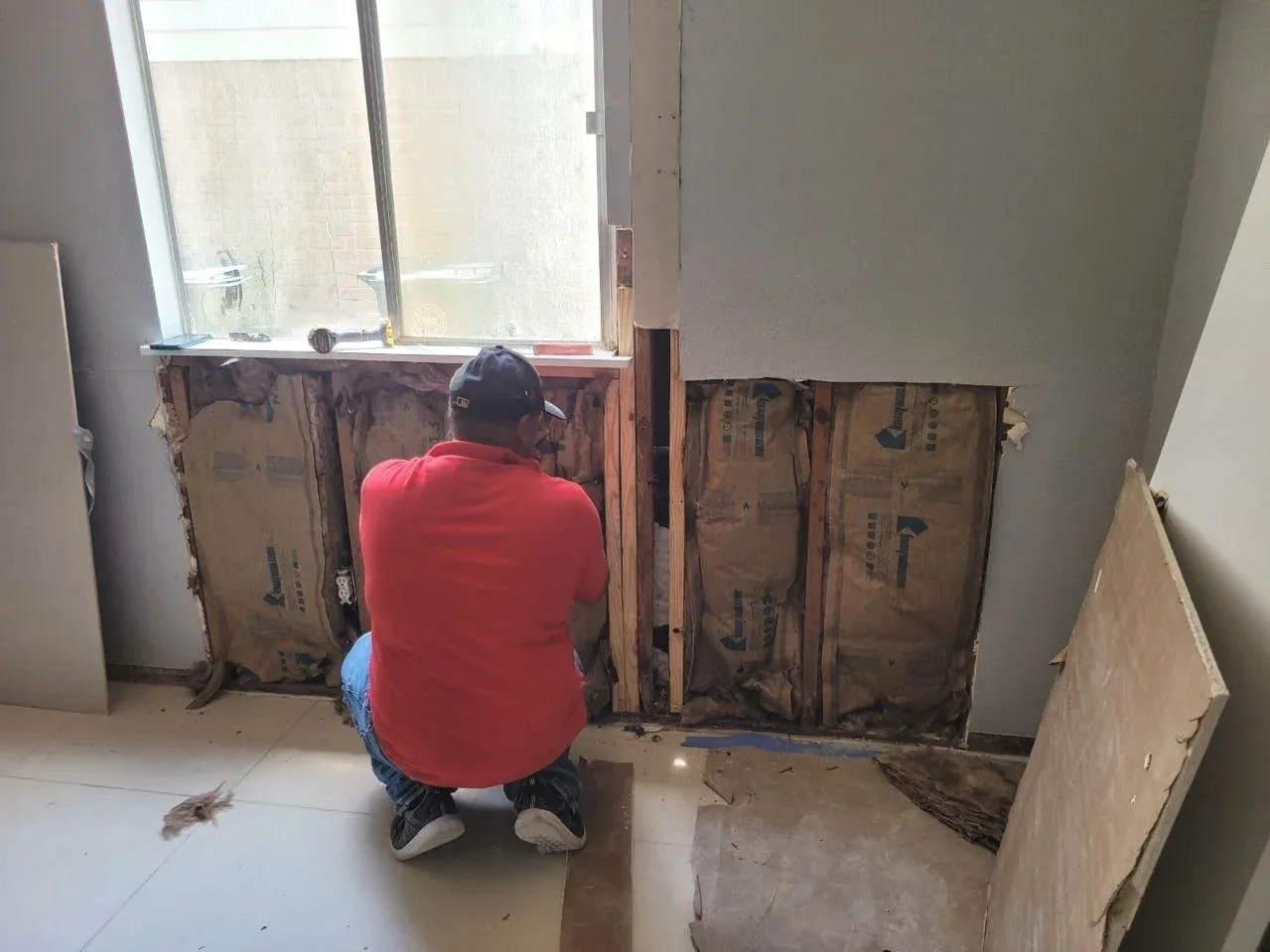
A burst supply line, a roof that gave up during a Gulf storm, or a slow leak behind a wall — however the water got in, most Sugar Land homeowners reach the same final step: the room has to be painted again. But repainting is the last move, not the first, and the order you tackle everything in decides whether the repair disappears or comes back as a brown stain six months later.
After years of being the crew called in to repaint these rooms across Fort Bend County, we've watched the projects that go smoothly follow the same sequence every time. Here's that order, and where each specialist fits.
The Right Order of Operations After Water Damage
Skipping or reshuffling these steps is the single most common reason a water-damage repaint fails:
- Stop the source and dry the structure completely
- Document everything for your insurance claim
- Repair or replace the damaged drywall and trim
- Prime with a stain-blocking sealer, then repaint
Paint cannot fix wet, and it cannot hide a problem that's still active. Each stage has to finish before the next begins.
Step 1: Stop the Water and Dry It Out
Before anyone thinks about color, the structure has to be bone-dry. Drywall, framing, and insulation hold moisture far longer than a surface looks wet, and sealing paint over a damp wall traps that water — which leads to bubbling, mildew behind the finish, and another repair within the year. For anything beyond a small, fresh spill, this is restoration work, not DIY. A dedicated water-damage restoration company like All Dry USA can extract standing water, set commercial drying equipment, and confirm with moisture meters that the wall is actually ready — not just dry to the touch. We won't prime a surface until that reading is right.
Step 2: Document It for Your Insurance Claim
Water damage is one of the most common homeowner's claims in the Houston area, and how you document it early shapes what gets covered. Photograph everything before any cleanup begins, keep receipts from the restoration crew, and call your agent quickly — many policies have tight notification windows. If you're unsure what your policy actually covers for sudden versus gradual water damage, an independent local agency such as Spiro Insurance can walk you through the claim and the difference before repairs start. Knowing what's covered up front keeps the drywall and paint stage from becoming an out-of-pocket surprise.
Step 3: Repair the Drywall and Trim
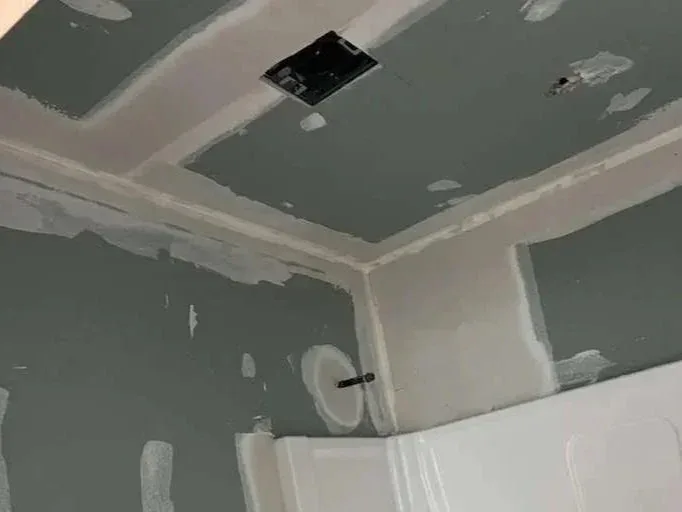
Once the area is dry and your claim is underway, the damaged material comes out. Stained, soft, or sagging drywall is cut back to solid board, fresh drywall is installed, and the texture is rebuilt to blend with the surrounding wall. This is the foundation the new paint sits on — our full drywall repair process covers exactly how we make a patch vanish under raking light, and we always seal old water marks so they never bleed back through.
Step 4: Prime, Seal, and Repaint
Even a perfectly dried and patched wall needs a stain-blocking primer before color goes on — water marks and tannins will ghost through standard paint without it. From there we repaint the full wall corner-to-corner (never just the patch) so there's no flashing or sheen difference. You can see how we prep every interior surface on our interior preparation process page, and browse the rest of our interior painting services for a full refresh while the room is already torn up.
Why the Sequence Is Non-Negotiable
The fastest way to pay for this job twice is to rush it — repainting over a wall that's still holding moisture, or before the structure has settled. We treat drying time and a clean moisture reading as hard requirements, then back the finished work with our written workmanship warranty. The same discipline applies if the damage hit your siding or eaves; our exterior painting crew follows the same dry-first rule outdoors.
Dealt with a leak or storm and staring at a stained, patched wall? Once the water's handled and the drywall's sound, we'll make the room look like it never happened. Reach out for a free estimate and we'll walk the space with you.