
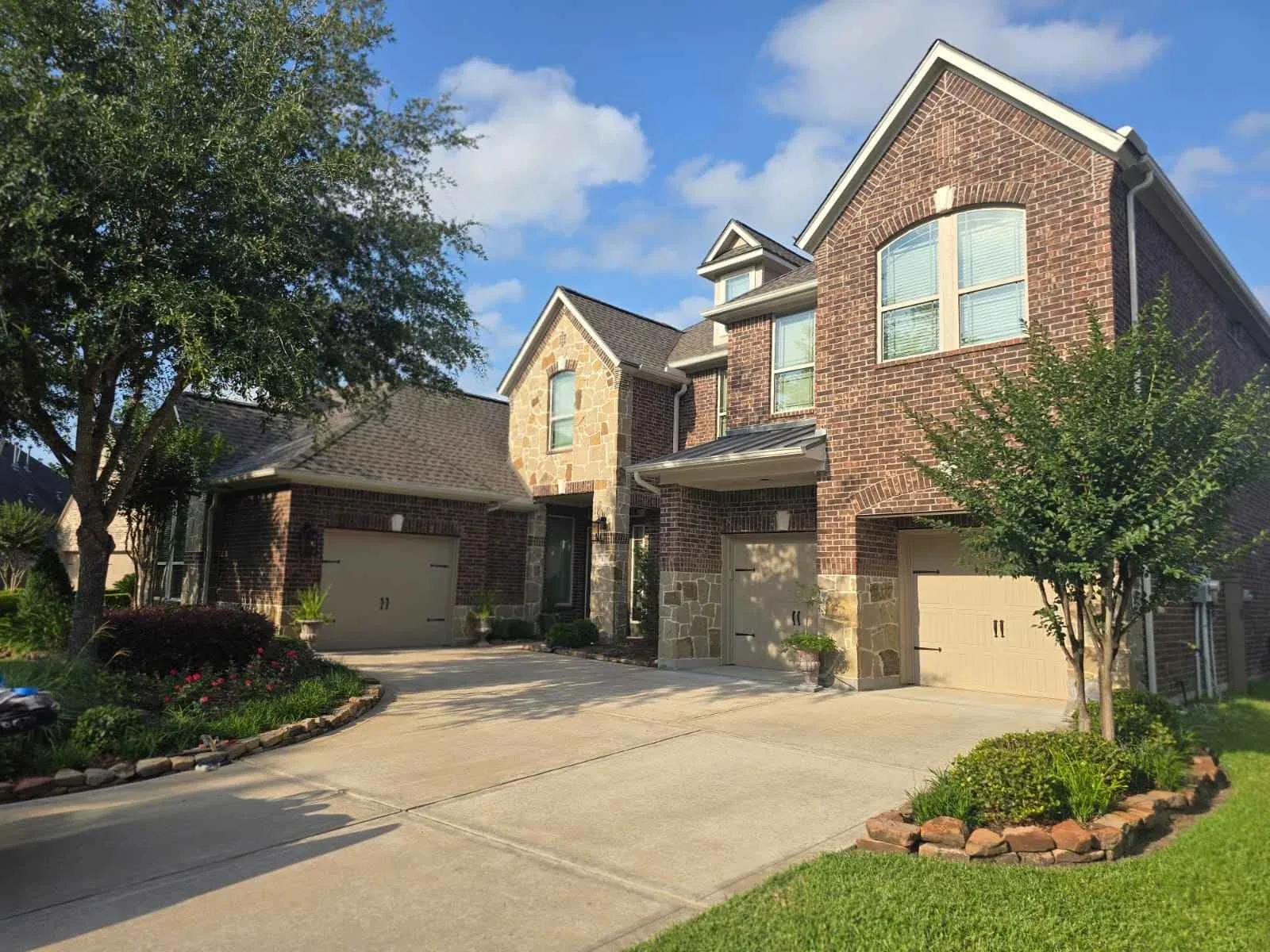
If you want an exterior color that holds up in the Texas sun, choose lighter, earth-toned, low-saturation colors built on UV-stable pigments. Soft greiges, warm taupes, sandy beiges, muted sage and blue-grays, and mid-tone neutrals weather far better than deep reds, bright blues, or dark saturated colors. Then pair that color with a premium fade-resistant exterior paint and real surface prep, because color choice and product quality work together. That combination is what keeps a home looking fresh years into our Gulf Coast climate.
Why Texas Heat, UV, and Humidity Fade Exterior Color
Fading is not random. Out here on the Gulf Coast, three forces gang up on your exterior at the same time.
- UV radiation breaks down the pigment and resin in the paint film. The longer and more intense the sun exposure, the faster that breakdown happens, and Fort Bend County gets a long, brutal season of it.
- Heat bakes the surface. Siding and stucco can run far hotter than the air temperature, which stresses the coating and accelerates chalking and dullness.
- Humidity and heavy rain add moisture, mildew pressure, and dirt pickup that wash out and grime up a finish over time.
Around Houston and Sugar Land you get all three in heavy doses. That is why a color that looks bulletproof in a cooler, drier climate can disappoint here. The fix is not luck. It is choosing pigments and products made to survive this environment.
Which Colors Fade Fastest, and Which Hold Up
Some colors simply have a harder life on a Texas exterior. The ones we see lose their richness soonest are the highly saturated, organic-pigment colors:
- Deep, bright reds and red-based tones, which are notorious for losing depth and shifting under UV.
- Vivid yellows, oranges, and terracottas, which can wash out or go uneven.
- Bright, intense blues, which lose their punch in direct afternoon sun.
- Dark, saturated colors like deep navy or charcoal. They may not fade the same way a bright red does, but they absorb more heat, stress the film harder, and show chalking and dullness sooner.
The colors that age gracefully are the opposite. Lighter values reflect more heat. Earth tones and muted neutrals carry less saturation, so there is less color to lose. Think soft greige, warm taupe, sandy beige, muted sage, mushroom, blue-gray, and mid-tone gray. When those are mixed with high-quality, UV-stable inorganic pigments instead of cheap organic colorants, you get a finish that holds its tone for years. If you want to go deeper on the worst offenders, our guide on which exterior paint color fades the fastest breaks them down color by color.
Paint Quality and Prep Decide How Long Color Lasts
Here is the part most homeowners underestimate. The color on the chip is only half the equation. The other half is the system underneath it.
A premium exterior paint carries more pigment, better resins, and stronger UV inhibitors than builder-grade product. That is what resists chalking and fade when the sun is relentless. Spend there and the same color will simply last longer.
Prep matters just as much. Color retention falls apart fast on a surface that was not cleaned, repaired, and primed correctly. Failed caulk, chalky old paint, and skipped priming all lead to early breakdown no matter how good the color is. We say it constantly: prep is a process, not a step. You can see how we approach the full job on our exterior painting service page, where prep and product selection are built into the plan from day one.
South- and West-Facing Walls Weather Fastest
Not every wall on your home ages at the same rate. In our experience across Sugar Land, the south- and west-facing elevations take the worst beating. They catch the most direct, most intense sun, especially in the hot afternoon hours, so they fade, chalk, and dull noticeably faster than shaded north-facing walls.
That is worth planning around. If you love a bolder or darker color, it is often smarter to place it on a protected entry, a covered porch, or a north-facing accent rather than blasting it across a west-facing two-story wall. Matching riskier colors to lower-exposure surfaces keeps a home looking even and fresh.
HOA-Friendly Palettes in Sugar Land and Fort Bend
There is good news if you live under an HOA in Sugar Land or elsewhere in Fort Bend County. Most approved palettes already lean toward exactly the colors that hold up best here. The soft neutrals, warm earth tones, and muted grays that pass HOA review are also the most fade-resistant choices in our climate.
That means staying compliant and choosing a durable color usually point in the same direction. Before you fall for a sample, pull your association's approved color list and check requirements. Our overview of little-known HOA requirements for exterior painting walks through what to confirm first. When you are ready to narrow the field with a pro, a color consultation helps you land on a shade that satisfies the HOA, suits your home, and survives the sun.
Sheen Choice and One Last Word on Longevity
Sheen quietly affects how a color ages. Flat finishes hide surface flaws but hold dirt and can chalk sooner. A low-sheen or satin finish strikes the best balance for most Texas exteriors. It sheds dirt and rain more easily and helps the color stay true longer. Higher-gloss sheens are best saved for trim and doors.
Put it all together and the recipe is simple. Choose a lighter, earth-toned, UV-stable color, buy quality paint, prep the surface properly, match bolder colors to low-exposure walls, and pick a sensible sheen. That is how you get an exterior that still looks great after years of Texas summers. The Proud Paintbrush is a residential painting contractor serving Sugar Land and Fort Bend County, and we help you choose colors that look right and last. Explore Sugar Land exterior painting, or request a free estimate. Call us anytime at (832) 605-0493.