
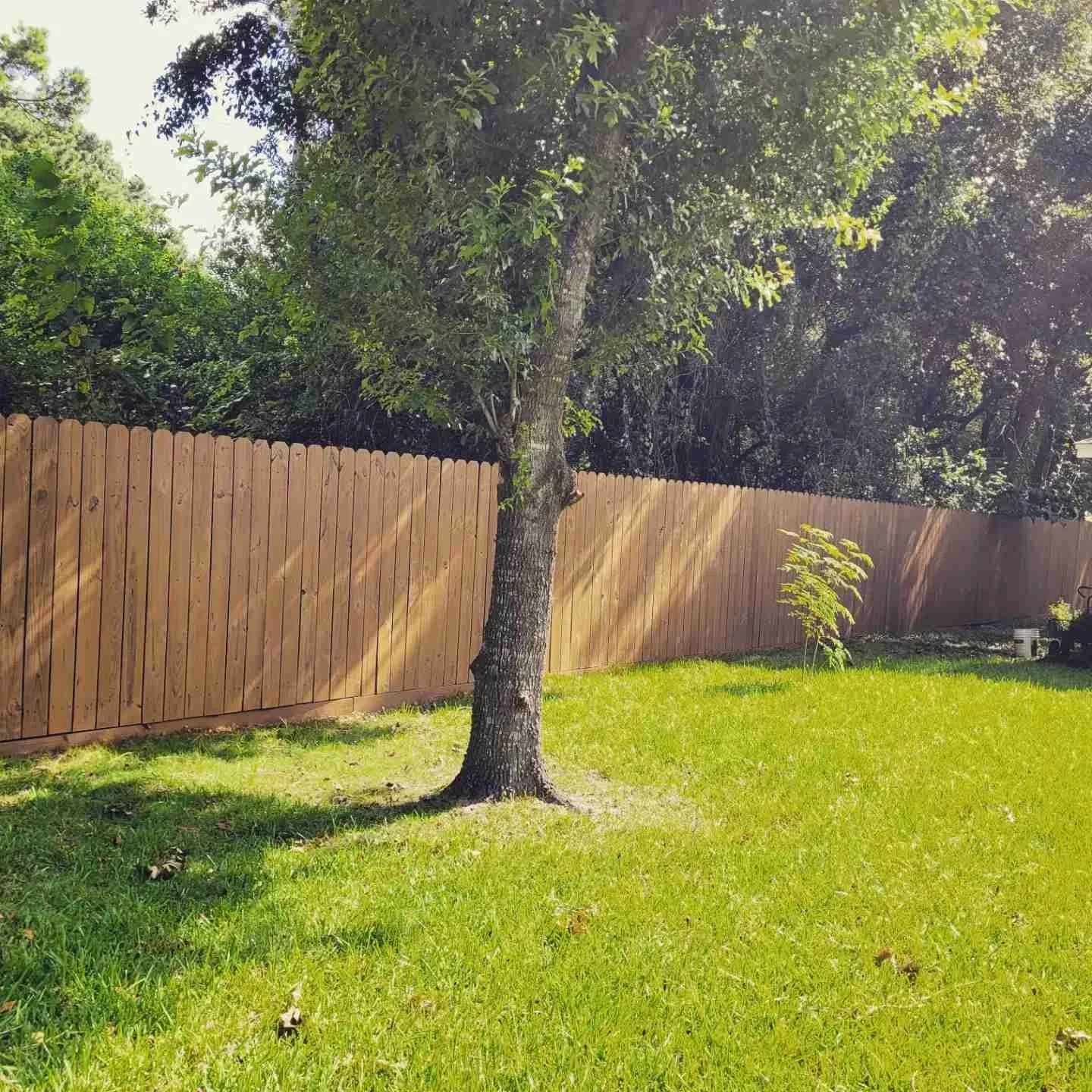
A cedar or pine fence is one of the largest wood surfaces on your property, and in Fort Bend County it takes a beating most homeowners underestimate. Left bare, the boards drink up afternoon sun, swell with every humid morning, and turn a tired silver-gray within a couple of seasons. A quality stain stops that clock — it locks out moisture, blocks UV, and brings back the warm tone that made you choose wood in the first place.
The Proud Paintbrush has been staining fences across Sugar Land, Missouri City, Richmond, and Katy since 2020, and we treat the job as protection first and good looks second. The difference between a fence that holds its color for years and one that blotches by next summer comes down almost entirely to what happens before the stain ever touches the wood. That is where most quick-spray crews cut corners, and where we don't.
What a Fence Staining Project Includes
Every fence is a little different, so we scope each one to the condition of the wood rather than quoting a flat per-foot number sight unseen. A typical project covers:
- Full cleaning — pressure washing to strip dirt, mildew, pollen, and any failing old finish so the new stain can grip bare wood.
- Surface prep — sanding rough or feathered boards, setting popped nails or screws, and flagging any pickets that need replacing before we seal.
- Stain & sealer application — penetrating stain worked into the grain by brush, roller, or sprayer-and-back-brush, including the tops of pickets and posts where rot starts.
- Tone selection — transparent, semi-transparent, or solid-body color matched to your home and landscape.
We handle gates, lattice, and shared property-line fences too, and we keep neighbors in the loop when a fence is split down the middle. For larger outdoor refreshes, fence work pairs naturally with the rest of our exterior painting services.
Why Houston-Area Wood Needs Real Prep
Our climate is hard on fences in a very specific way. The Gulf Coast hands wood a double problem: relentless humidity that keeps boards damp and feeds mildew, plus long, brutal summer sun that bleaches and dries the surface fibers. Stain applied over a dirty, gray, or still-damp fence simply sits on top, beads off in the first hard rain, and peels in patches. To bond properly and last, the wood has to be clean, sound, and dry to the core. That is why we lead with a thorough pressure washing and then let the fence dry before a single drop of stain goes on — rushing that window is the number-one reason DIY stain jobs fail around here.
How We Stain Your Fence
- Walkthrough & quote — we inspect both sides of the fence, check moisture, and give you an itemized estimate with no surprises.
- Wash & dry — we clean the full surface and allow proper dry time, which the Texas weather dictates more than the calendar does.
- Repair & prep — sanding, fastener fixes, and picket swaps so the finished line looks uniform.
- Stain & seal — we apply a UV- and water-resistant stain, back-brushing for even penetration, and protect your plants, patio, and pool deck while we work.
- Final inspection — we walk the fence with you before we call it done.
Not sure which tone suits your home? A quick color consultation helps you choose between a natural cedar look and a richer, more opaque finish that hides age. You can also read exactly how we get surfaces ready on our exterior prep process page.
Stain or Solid Color — Which Lasts Longer Here?
In our heat, semi-transparent penetrating stains tend to be the sweet spot: they soak into the grain, breathe with the wood, and wear by fading gently rather than peeling. Solid-body stains give the most UV protection and the most uniform color, which is the right call for older or mismatched fences. If your fence borders a stained deck or matching railings, we can carry the same tone across all of it — see our deck staining and railing staining services to keep the whole yard cohesive.
Why Sugar Land Homeowners Pick The Proud Paintbrush
We are a locally owned, licensed, and insured company that has worked Fort Bend yards since 2020 — so we know exactly how this soil, sprinkler spray, and sun age a fence, and we plan around it. We never spray stain over a fence we haven't properly cleaned and dried, and our work is backed by a written workmanship warranty with 2-year and 5-year packages, which is rare in fence staining. The person who quotes your job is the person who stands behind it. You can review transparent exterior pricing or confirm we cover your street on the Sugar Land service area page.